

Tanzania Calving Season Safari: The Ultimate Guide to the Great Wildebeest Migration in Ndutu
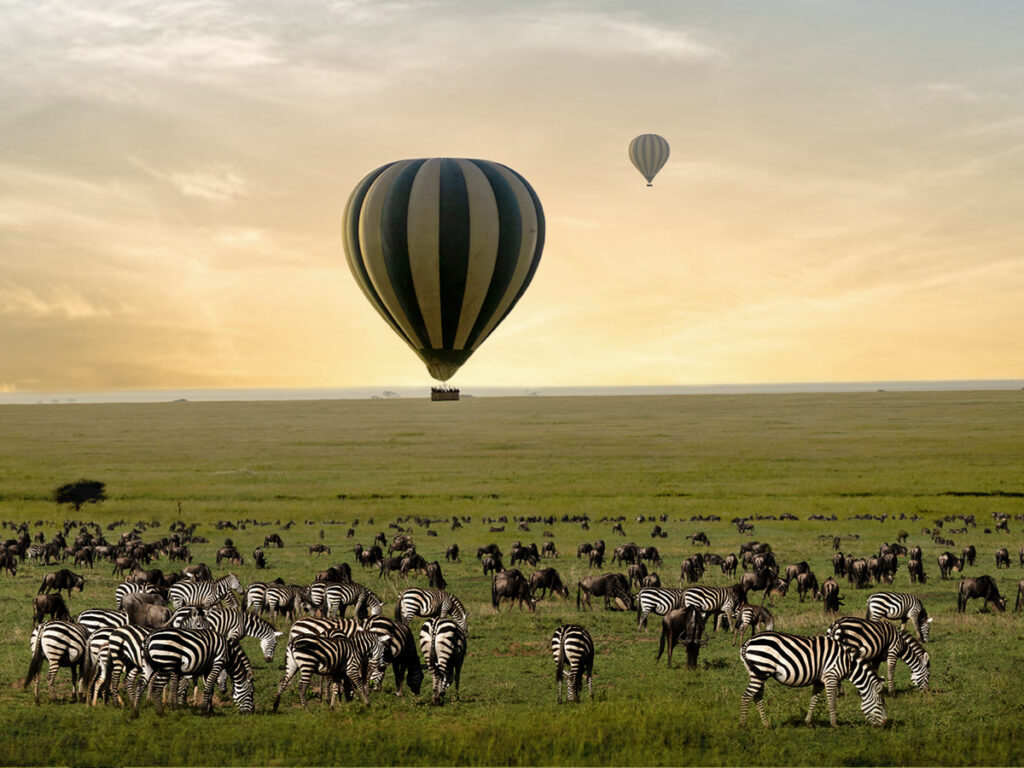
Tanzania’s calving season is one of the most remarkable wildlife spectacles in Africa. Every year, hundreds of thousands of wildebeest gather across the short-grass plains of the southern Serengeti and the Ndutu area, creating an extraordinary concentration of wildlife. The landscape becomes a nursery for the Great Migration, where newborn calves take their first steps, predators follow the herds, and dramatic scenes of survival unfold across the plains.
For travelers interested in wildlife, photography, and authentic safari experiences, a Tanzania calving season safari offers something very different from the famous Mara River crossing season. Instead of focusing primarily on dramatic river crossings, calving season is about new life, predator action, vast herds, intimate wildlife encounters, and the fascinating cycle of the Great Migration.
The peak calving period generally occurs from January through March, with February often considered one of the most productive periods for witnessing large numbers of newborn wildebeest. The exact timing and location of the herds can vary depending on rainfall and grass conditions, so experienced safari guides play an important role in locating the migration.
What Is the Wildebeest Calving Season?
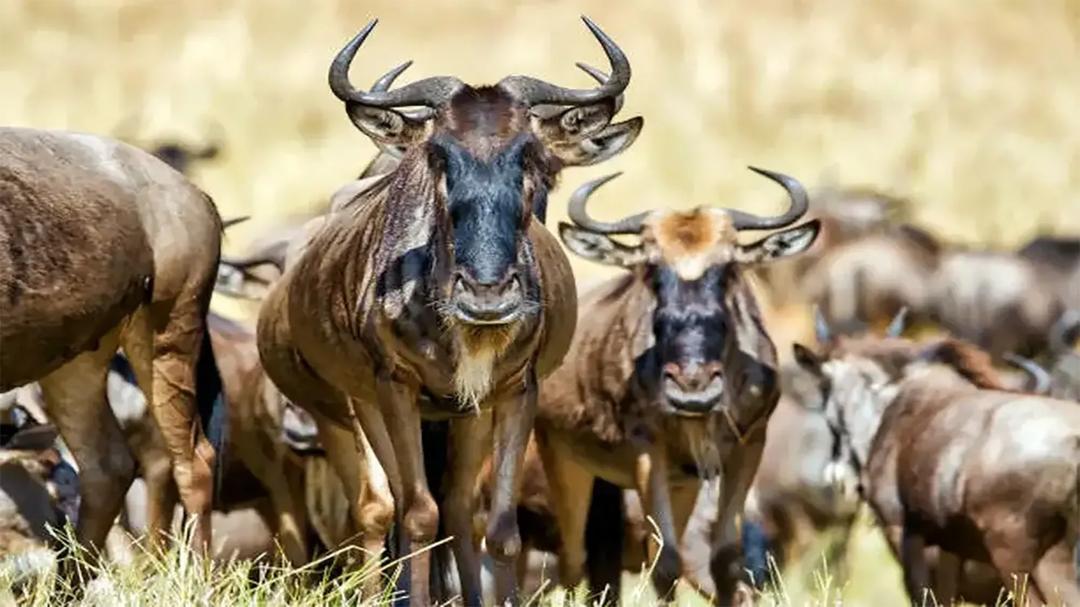
The Great Migration is a continuous annual movement of wildebeest, zebras, and other grazing animals across the Serengeti ecosystem in Tanzania and the Maasai Mara ecosystem in Kenya. The animals move in response to rainfall, fresh grass, and water availability.
During the calving season, the herds concentrate in the southern Serengeti and Ndutu plains, where nutritious short grasses provide ideal conditions for mothers and their newborn calves.
The calving period is particularly important because wildebeest reproduction happens on a remarkable scale. In a relatively short period, hundreds of thousands of calves may be born. This synchronized birthing strategy increases the chances of survival for individual calves because predators cannot concentrate on only one or two newborn animals.
The result is one of nature’s most dramatic combinations of abundance and danger.
A typical morning in Ndutu during calving season can involve watching large herds spread across the plains, mothers calling for their calves, newborns learning to walk, zebras grazing nearby, and predators such as lions, cheetahs and hyenas actively searching for vulnerable young animals.
Why Is Ndutu the Best Area for Calving Season?
Ndutu is located in the southern part of the Serengeti ecosystem, close to the Ngorongoro Conservation Area. It is particularly famous for its role during the calving season because the surrounding plains can become an important gathering area for the migrating herds.
The environment is characterized by open grasslands, scattered acacia trees, seasonal lakes and impressive views. During the rainy season, the landscape can transform dramatically, becoming green and highly productive.
The short grass is especially valuable to wildebeest because it is rich in nutrients. The animals can feed extensively while mothers are nursing their young.
For safari travelers, the combination of open terrain and large concentrations of animals can create excellent opportunities for wildlife viewing and photography.
However, it is important to understand that the migration is a natural phenomenon, not a scheduled event. No responsible safari company should guarantee that a specific herd will be in a particular location on a particular day.
Weather conditions, rainfall patterns and grazing conditions influence where the animals gather.
When Is the Tanzania Calving Season?
The calving season generally takes place between January and March, although the exact timing can change from year to year.
January can be an excellent time to visit the southern Serengeti and Ndutu as the plains may already be green and the migration may be concentrated in the region.
February is traditionally regarded as one of the strongest periods for calving activity. Large numbers of newborn wildebeest can be seen, while predators take advantage of the abundance of vulnerable young animals.
March can also provide excellent wildlife experiences, although the herds may gradually begin moving as environmental conditions change.
Because the migration responds to rainfall rather than a fixed calendar, travelers should avoid thinking of calving season as a single exact week. Instead, it is better to consider January to March as the broader calving period, with February often being particularly attractive for visitors seeking newborn wildlife.
What Happens During the Calving Season?
The birth of wildebeest calves is one of the central events of the season.
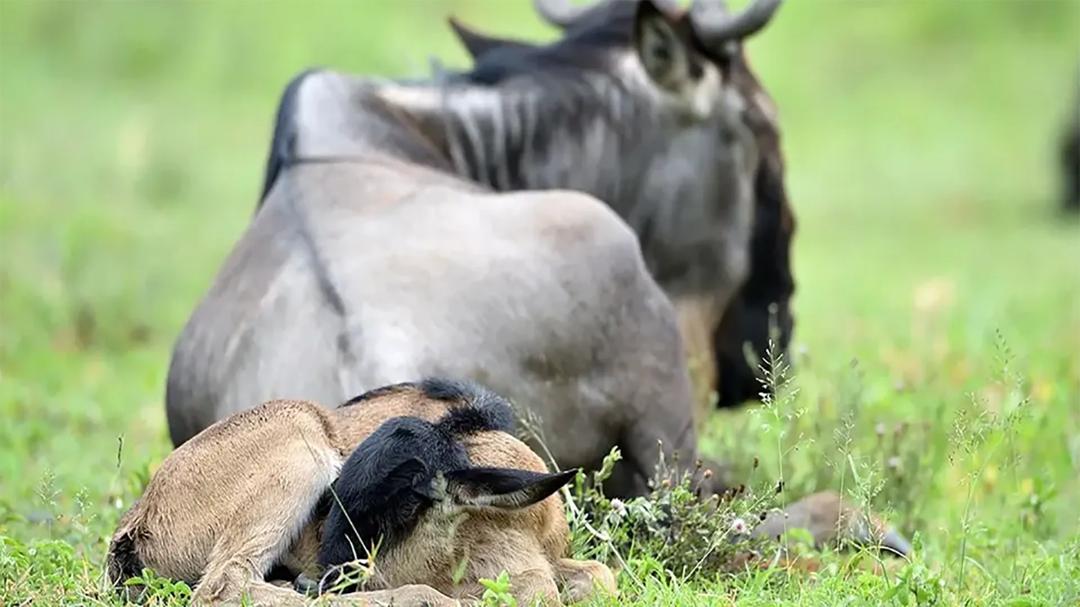
Wildebeest mothers generally give birth in open areas where they can detect predators. Shortly after birth, a calf must become mobile. This is essential because remaining stationary in open grassland can make it vulnerable to predators.
Watching a newborn calf stand for the first time can be an unforgettable safari experience. The calf may initially appear unsteady, but it develops strength quickly and begins following its mother.
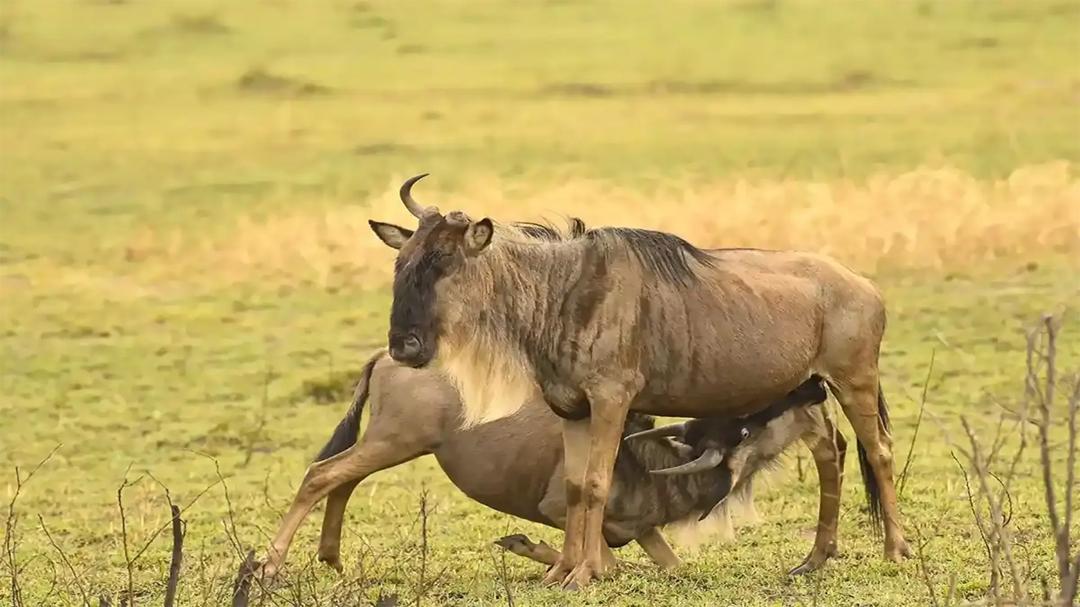
The mother and calf must also recognize each other among thousands of animals. This creates fascinating scenes as mothers call for calves and young animals move through the herds.
For visitors, these moments provide an opportunity to observe animal behavior rather than simply ticking species off a checklist.
Predator Action During Calving Season
One of the main reasons experienced safari travelers choose calving season is the concentration of predators.
Newborn calves provide abundant food for predators, particularly during the peak birthing period. Lions, cheetahs, hyenas and other predators may patrol the plains in search of opportunities.
Cheetahs can be especially fascinating to watch in open grasslands because the terrain allows them to use their speed when hunting.
Lions may position themselves near areas where wildebeest and zebra are concentrated. Hyenas can also be active around the herds and may take advantage of vulnerable calves.
The presence of predators does not mean that every game drive will involve a hunt. Wildlife behavior is unpredictable. A safari guide may spend hours observing a pride of lions before anything dramatic happens.
That unpredictability is part of what makes the experience authentic.
Calving Season and the Circle of Life
The calving season provides an unusually clear view of the ecological cycle.
Fresh rainfall stimulates grass growth. Herbivores gather to feed on nutritious vegetation. Mothers give birth to calves. Predators follow the herds because food is abundant. Scavengers take advantage of remains from successful hunts. Eventually, changing environmental conditions encourage the herds to move again.
This cycle demonstrates how interconnected the Serengeti ecosystem is.
A calving season safari therefore offers more than an opportunity to see baby animals. It allows travelers to observe one of Africa’s largest natural ecosystems operating on a massive scale.
Calving Season for Wildlife Photographers
Ndutu and the southern Serengeti are particularly appealing to photographers during the calving season.
The open plains can provide unobstructed views of wildlife, while the green landscape can create attractive backgrounds. Early morning and late afternoon light can also be excellent for photography.
Photographers may capture images of newborn calves, mothers and young animals, predators, large herds, zebra, giraffe, lions, cheetahs and dramatic landscapes.
A private safari vehicle can be particularly useful for photographers because it offers greater flexibility. The vehicle can spend more time at a sighting without being constrained by a fixed group itinerary.
A private vehicle also allows travelers to carry camera equipment comfortably and choose departure times according to wildlife conditions.
A pop-up roof provides elevated viewing and photography opportunities while maintaining a comfortable position inside the vehicle.
Travelers should bring spare batteries, memory cards, appropriate camera lenses, cleaning equipment and protection for their equipment from dust.
How Many Days Should You Spend in Ndutu?
For travelers specifically interested in calving season, spending several nights in the Ndutu area is highly recommended.
A short visit may provide good sightings, but additional time increases the opportunity to experience different wildlife activities and follow changing animal movements.
Two full days in Ndutu can provide a much deeper experience than simply driving through the area.
Three nights can be particularly useful because it gives travelers more flexibility to explore the surrounding plains without constantly changing accommodation.
A well-designed calving season itinerary might include Tarangire National Park before moving to Ndutu, followed by several nights in Ndutu, additional time in the Central Serengeti, and a visit to the Ngorongoro Crater.
This combination provides a balance between migration, general wildlife viewing, landscapes and different ecosystems.
Combining Ndutu With Tarangire National Park
Tarangire National Park is an excellent addition to a northern Tanzania safari.
The park is particularly known for elephants, large baobab trees and diverse wildlife. It provides a different landscape from the open plains of Ndutu.
Beginning a safari in Tarangire can therefore provide a gradual introduction to Tanzania’s wildlife before travelers continue toward the migration areas.
A two-night Tarangire stay can be especially valuable for visitors who have enough time for a longer private safari.
The contrast between Tarangire’s woodland environment and Ndutu’s open grasslands adds variety to the journey.
Combining Calving Season With the Ngorongoro Crater
The Ngorongoro Crater is another important destination to include in a northern Tanzania itinerary.
Unlike Ndutu, which is particularly associated with the seasonal migration, Ngorongoro provides a concentrated wildlife environment within the crater.
A descent into the crater can offer opportunities to see lions, elephants, buffalo, hippos, zebras, wildebeest and other species.
The crater also provides spectacular scenery, making it an excellent complement to a migration-focused safari.
For travelers visiting during calving season, combining Ndutu with Ngorongoro allows them to experience two very different wildlife environments within the same trip.
Why Choose a Private Safari During Calving Season?
A private safari can offer significant advantages during the migration.
The location of wildlife changes constantly, and flexibility can be valuable. With a private vehicle, travelers can generally spend more time at important sightings and adjust the day's route according to wildlife activity.
This is particularly useful for photographers and families.
A private safari also allows travelers to customize the itinerary. If the main objective is calving season, more nights can be allocated to Ndutu instead of adding destinations that would reduce time in the migration area.
For example, a traveler might prefer three nights in Ndutu rather than adding Lake Manyara simply to include another national park.
The right itinerary should be based on the traveler's priorities rather than the number of destinations included.
Choosing Accommodation During Calving Season
Accommodation is an important consideration because staying close to the migration can reduce unnecessary driving.
During the calving season, travelers can choose from camps and lodges in or around the Ndutu area. Mobile camps can be particularly attractive because they are designed to operate in migration regions and can provide a more immersive safari experience.
Travelers should consider the location of the accommodation, comfort level, meals, bathroom facilities and accessibility.
Luxury travelers may prefer high-end tented camps with spacious rooms, private bathrooms and premium services.
Midrange travelers can choose comfortable tented camps or lodges that offer a balance between price and quality.
Budget-conscious travelers may consider simpler accommodation options while still maintaining access to the migration area.
The key consideration is not simply the luxury level but the location and suitability for the safari itinerary.
What Is the Difference Between Calving Season and River Crossing Season?
The calving season and Mara River crossing season are both major highlights of the Great Migration, but they offer completely different experiences.
During the calving season, the main attraction is newborn wildlife and predator activity. The herds are concentrated in the southern Serengeti and Ndutu region.
During the river crossing season, large herds move toward the northern Serengeti and eventually cross rivers such as the Mara River as they continue their migration.
River crossings are famous for dramatic scenes involving thousands of wildebeest entering the water, but they are unpredictable and cannot be guaranteed.
Calving season is often more suitable for travelers who want to see newborn animals and predator-prey interactions.
River crossing season may appeal more to travelers interested in dramatic migration movement.
Neither season is universally better. The best choice depends on what type of safari experience the traveler wants.
Is January a Good Month for a Calving Safari?
January can be an excellent month for visiting the southern Serengeti and Ndutu.
The timing of rainfall can influence where the herds are concentrated, but January is within the traditional calving period.
One advantage of January is that travelers may encounter the beginning or buildup of major calving activity while enjoying greener landscapes.
Travelers planning a January safari should book accommodation early, particularly if they want to stay close to the Ndutu plains.
Is February the Best Month for Calving?
February is often considered one of the strongest months for the calving experience.
Large numbers of wildebeest can be concentrated in the southern Serengeti ecosystem, and newborn calves may be visible across the plains.
The combination of large herds, young animals and predators makes February especially attractive for wildlife photographers and travelers seeking a migration-focused safari.
However, exact wildlife conditions can change from year to year.
A reputable safari operator should avoid promising guaranteed sightings and should instead explain the natural variability of the migration.
Is March Still Good for Calving Season?
Yes. March can still provide excellent opportunities for wildlife viewing.
Depending on rainfall and grazing conditions, significant numbers of animals may remain in the southern Serengeti.
However, as the season progresses, migration movements may begin to change.
Travelers visiting in March should therefore remain flexible and allow their guide to adjust routes according to current wildlife conditions.
What Should You Pack for a Calving Season Safari?
A calving season safari requires practical clothing and equipment.
Lightweight neutral-colored clothing is useful for daytime game drives. A warm layer is recommended because early mornings can be cold, particularly during long drives and open-vehicle activities.
Comfortable closed shoes, sunglasses, sunscreen and a hat are useful.
For photography, bring extra batteries, memory cards and suitable lenses. A telephoto lens can be particularly useful for wildlife photography.
Binoculars are also highly recommended because they allow travelers to observe animals that may be farther from the vehicle.
A small daypack can be useful for carrying personal items during game drives.
The Role of an Experienced Safari Guide
A knowledgeable guide can make a significant difference during calving season.
Wildlife is constantly moving, and guides use their experience, knowledge of the ecosystem and communication with other safari professionals to locate animals.
An experienced guide also understands animal behavior and can explain what is happening rather than simply identifying species.
For international travelers, language can also matter. Travelers who prefer a Spanish-speaking safari, for example, should request a fluent Spanish-speaking guide in advance rather than assuming that an English-speaking guide will provide the same level of communication.
For specialized trips such as a January Ndutu calving safari, it is also reasonable to ask about the guide's experience in the Ndutu area and during the calving season.
Sustainable and Responsible Wildlife Tourism
Calving season is a sensitive period because large numbers of animals are concentrated in relatively small areas.
Responsible safari operators should follow park and conservation regulations and maintain appropriate distances from wildlife.
Visitors should never pressure guides to approach animals irresponsibly for photographs.
Wildlife should always have the right of way.
Responsible tourism also means supporting accommodation providers, guides, conservation initiatives and local communities that contribute to the long-term protection of Tanzania's natural resources.
The objective should be to observe wildlife without unnecessarily disturbing it.
Planning Your Tanzania Calving Season Safari
A successful calving season safari requires careful planning.
Start by choosing the travel period, then determine how many nights you want to spend in Ndutu. If calving is the primary objective, avoid creating an itinerary with too many destinations and insufficient time in the migration area.
A private safari can provide the greatest flexibility, especially for travelers who want longer game drives, photography opportunities or specialized interests.
A typical longer itinerary might begin in Arusha, continue to Tarangire, move toward Ndutu for several nights, continue to Central Serengeti, visit Ngorongoro Crater and then return to Arusha.
This structure provides a strong balance between different ecosystems while giving the migration the attention it deserves.
Why a Tanzania Calving Season Safari Is Worth Experiencing
The calving season represents one of the most extraordinary moments in the natural world.
It combines massive herds, newborn animals, predators, dramatic landscapes and the constant movement of the Great Migration.
Unlike a traditional safari where visitors may spend much of their time searching for individual animals, calving season can create an environment where wildlife seems to dominate the entire landscape.
A traveler may watch thousands of wildebeest moving across the plains in the morning, encounter a herd of zebra later in the day, observe a lion pride resting near a seasonal water source, and finish the afternoon watching a newborn calf follow its mother.
These experiences demonstrate why the Serengeti is considered one of the world's great wildlife destinations.
For travelers planning a Tanzania safari between January and March, the southern Serengeti and Ndutu should be seriously considered.
The most important point is to plan around the migration rather than simply adding Ndutu as a brief stop. Give the area enough time, choose accommodation carefully, use an experienced guide and remain flexible because nature does not follow an exact itinerary.
Calving season is not simply about seeing baby wildebeest. It is about witnessing an entire ecosystem responding to new life.
From the first uncertain steps of newborn calves to the movement of enormous herds across green plains, the season provides a rare opportunity to observe the Great Migration at one of its most important stages.
For wildlife enthusiasts, photographers, families and first-time safari travelers, a well-planned Ndutu calving season safari can become one of the most memorable experiences in Tanzania.
Final Thoughts
Tanzania's calving season offers a different perspective on the Great Migration. While the Mara River crossings receive enormous international attention, the southern Serengeti provides an equally compelling experience centered on birth, survival and predator-prey relationships.
January, February and March can provide outstanding opportunities to explore Ndutu and the surrounding southern Serengeti ecosystem. February is often particularly attractive for travelers seeking the peak calving experience, although actual conditions depend on rainfall and the natural movement of the herds.
The best safari is one that allows enough time to experience the destination without rushing from one park to another. For a migration-focused journey, several nights in Ndutu, combined with carefully selected time in Tarangire, Central Serengeti and Ngorongoro, can create a comprehensive northern Tanzania safari.
If your main goal is to witness newborn wildebeest, large herds and intense predator activity, Tanzania's calving season deserves a place at the top of your safari plans.
Contact Us for the Best Choice of Your Safari